By Emen William Garcia
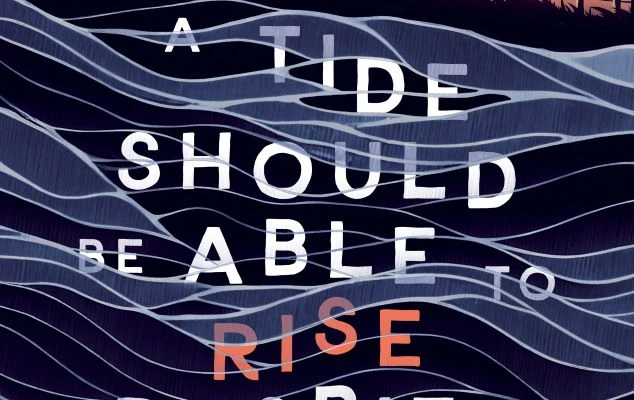
To review a book about Africa while knowing very little of Africa is at once a gift and a curse. My response, both in writing and in thought, is by default, limited in breadth and in depth; I happen to be suspended at a distance better suited for lobbing the broader, flimsier generalizations typical of outsiders. And yet, paradoxically, my writing and thought on the matter are still valid precisely because I am an outsider. There’s a reason why this book’s author prefers (and at once laments) to describe Africa as an “invisible continent”; there’s a reason why Africa has always been “invisible” to me.
As the great Christopher Hitchens once prudently suggested in a debate before an institution of higher learning, shedding the “appalling burden” of cluelessness “is something we all have to take on.” (more…)
By Emen William Garcia
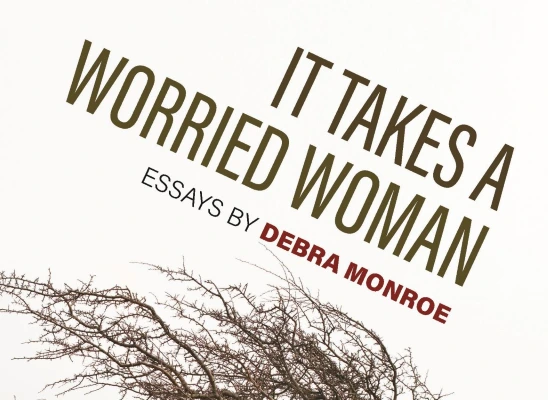
Much like the travesty of me and Hitch, my newfound hero of journalism and intelligent conversation, I hadn’t known anything about the late David Foster Wallace before his death (by hanging, in 2008). I hadn’t read any of his novels, and admittedly, given my aversion to even literarycontemporary fiction, I likely won’t any time soon (at this stage, I prefer the stories of authors who’ve been dead much longer). I first learned of him by accident; it had begun with a spur-of-the-moment viewing of Erik Skjoldbjærg’s disarming though undeservedly underrated Prozac Nation, an unabashed look at a prodigious Harvard writer’s bout with severe depression (played by an, again, equally disarming albeit undeservedly underrated Christina Ricci). I learned that what I was watching was an eponymous adaptation of a memoir by New York writer Elizabeth Wurtzel—whose Wikipedia page links to Wallace.
Like Wurtzel, Wallace suffered from severe depression. On one hand, Wurtzel more or less eulogized him in a New York article a little more than a week after his suicide; on the other hand, she seized the moment to opportunely highlight the reality of depression, an exploitative gesture I’d implore the article’s readers to both understand and forgive. Of Wallace, Wurtzel writes, “I don’t think he exactly told me that he was a genius, but I must have gotten that impression, because I believe I was instantly impressed by something about him.” (more…)
Steven Spielberg isn’t the only guy interested in exploring the multiplicity of Abraham Lincoln’s life and death. In 2004, after President Reagan’s death, writer Kurt Kennedy became curious about one of the United States’ most despised and beloved presidents – Abraham Lincoln. He started by devouring research on Civil War embalming techniques and Lincoln’s funeral train. Laying Lincoln Down tells the story of Lincoln’s funeral train from the unexpected perspective of Lincoln’s embalmer, Henry P. Cattell, who was one of more than 300 people to accompany “The Lincoln Special” on the entire 1,654 mile funeral procession route which retraced Mr. Lincoln’s cross-country journey as president-elect in 1861. And since there is always more than one way to tell a great story, Kennedy has also created a graphic novel version of Laying Lincoln Down with artist Dan Bauer. Kennedy sat down with HYPERTEXT’s Emily Roth to discuss the research, writing and art of this incredible and complicated project.
Prior to Dwarf: A Memoir, the only book I ever bothered to read (and finish) about “little people” was The Hobbit. Unlike The Hobbit, Dwarf is not epic medieval fantasy, nor is it about hobbits or “actual” dwarves, neither of which exist I think. For the sake of political correctness, it’s rather a biography of a “little person”: one in whom we observe the sort of dwarfism—more or less obvious signs of slowed, stunted, or otherwise abnormal growth—that can result from any one of 200 to 300 or more distinct medical conditions.
To put politically incorrectly, I’ve read a book about a “midget.”
Co-written by People.com editor and author Rennie Dyball, Dwarf is the autobiography of Tiffanie DiDonato, who at birth was diagnosed with diastrophic dysplasia. For readers unsure of what that is exactly, DiDonato goes through the trouble to “save you the trip to Wikipedia”, explaining it as “a very rare type of dwarfism that results in short stature, joint deformities, and very short arms and legs.”
“From birth to the age of twelve,” she writes, “my arms were so short that I couldn’t reach my own ears, or other parts of my body for that matter.”
Starting at the age of 12, Tiffanie underwent a series of then-controversial bone-lengthening procedures, which essentially involved breaking/sawing the bones in her arms and legs into segments, using external metal pins and braces to align them, and regularly separating the bones a millimeter at a time (by turning a screw)so that the bones regenerate in the negative space between them and fill in the gaps—effectively lengthening the limbs. (more…)
Tommy lay in the darkness of his bedroom, tossing softly with his panda bear pillow, struggling to find just the right comfy spot to fall into a deep sleep. Outside his door his mother and father’s voices melted into the crooning of Rick James. It felt like warm honey on Tommy’s ears. The sounds and movements in the living room nudged against the edges of his dark cocoon.
With a twist to the right, Tommy found that spot. He felt himself slipping into the void…
Crash
Sleep fell away from Tommy. The sounds of the front room jaggedly ripped into the bedroom. There were screams and wails, grunts and the sound of crunching glass.
Tommy pushed himself out of bed. Panda pillow cast aside. He opened the door and ran into the hall.
No, No,
Why you make me do that huh, why you make me…
Ugh, Ugh uhh!
Tommy stopped short at the rim of the room. There stood his father crying and muttering to himself, ‘why you make me,’ each word like taffy in his mouth. His shoulders hunched, a jagged gin bottle remnant in his right hand. His left hand was paralyzed into a claw.
His mother was sitting straight like six o’clock in a ripped vinyl kitchen chair. Her face pressed into a fright mask. Lips pulled low, eyes alive with fire. She was drenched to her torso in gin and blood. Her breathing was quick and shallow. It reminded Tommy of a dying bird that had crashed against his window last summer. He watched that bird, each second pulled out into an hour, until that bird’s breathing ceased. He felt cold, wondering if history would repeat. But his mother didn’t stop breathing. The middle of her scalp laid open as if it had been unzipped. The pieces of glass sparkled in her hair like diamonds in the sun.
Tommy couldn’t put into words what he felt at that moment. But he did get a picture in his mind. It was of the time he was left alone on the school playground.
Dusk hung heavy in the air, his mother and father weren’t there to fetch him. All the other kids and adults were gone. He stared at the empty play-lot and shivered. The jungle gym looked like the skeleton of some long dead beast.
Brittle, crunchy leaves blew across the ground, sounding like a cracked baby’s rattle. The metal chain of the swing knocked against the swing set pole,
Cling… chink… cling
That vision sat in his mind as he watched his mom and dad now. He didn’t know it, but the oily residue of these desolate memories would come bubbling up inside of him until the very end of his days.
Tony A. Bowers is a Columbia College Chicago Fiction Writing Department MFA graduate. He has published short stories in Hair Trigger 30, Hair Trigger 31, The Story Week Reader and several online magazines.
While writing his second novel, Cheeseland, Randy Richardson used fiction as a vehicle to mold ghosts from his own past, transform them into art and examine how a single event can reverberate over time. Cheeseland tells the story of two boys who, after a mutual friend’s suicide, skip their high school graduation, take a road trip to Wisconsin and attempt to rebuild their devastated friendship. Richardson sat down with HYPERTEXT to discuss the journey of writing and publishing this novel — as well as how art can become activism.
Cheeseland is available for purchase in e-book form, and paperbacks are available for purchase through Eckhartz Press. And check this out: one dollar from every soft-cover book sale will go to the non-profit suicide prevention initiative Elyssa’s Mission.
HT: How did you find Echartz Press?
Randy Richardson: I’m not so sure that it wasn’t a case of Eckhartz finding me more than me finding them. Eckhartz is a small independent publisher that Rick Kaempfer and David Stern launched in Chicago about a year ago. I’d known Rick beforehand. We’d both contributed to the Cubbie Blues anthology and we shared many common friends, interests and experiences, not the least of which was that we were both long-suffering, die-hard Cubs fans. Rick is also a member of the Chicago Writers Association, a group to which I serve as president. He attended one of our events and tapped me on the shoulder. He had heard through the grapevine that I was shopping a manuscript, and asked me how that was going. Well, I told him it wasn’t going all that well, and he then asked me if he could take a look at it. I of course said yes, and a couple months later he asked me if he could publish it. From the day Rick asked to see my manuscript until the day Cheeseland was released was about six months. It all happened very fast, which is not the norm in the publishing world. (more…)
While censors and book-banners continue to suffer from arrested development, young adult fiction keeps evolving. After all, young adult fiction tackles the same themes as so-called ‘adult’ fiction — questions of sexuality, depression, love, peer pressure, illness, divorce, violence, drug/alcohol abuse, bullying — while keeping a young audience in mind. A number of beloved books, including Are You There God? It’s Me, Margaret by Judy Blume, The Perks of Being A Wallflower by Stephan Chbosky, Catcher in the Rye by J.D. Salinger, The Chocolate War by Robert Cormier, In the Night Kitchen by Maurice Sendak, Bridge to Terabithia by Katherine Paterson and A Light in the Attic by Shel Silverstein are just a few of the most frequently banned young adult books.
So, is there such a thing as a young adult book that is too dark or too mature? HYPERTEXT talks to writers Laurie Lawlor and Stephanie Kuehnert about the intricacies of writing young adult fiction.
DD: Is censorship still hard to deal with when writing young adult fiction? Judy Blume broke some barriers. Does censorship still exist? (more…)
By Emily Roth
Combining the twin passions of most writers – drinking and listening to great writing – seemed like a no-brainer. So in spring 2005, Julia Borchers (and a few buddies) founded Reading Under the Influence. Since then RUI, as it is better known, has been serving up great stories and drinks the first Wednesday of every month at the classic north side pub Sheffield’s. Julia, who is also a Chicago writer and teacher, sat down with HYPERTEXT to talk about the technicalities of the series as well as its implications for Chicago and literature as a whole. (more…)
Christine Sneed has put in her 10,000 hours and then some, Mr. Gladwell. I first heard Christine read last winter on a frigid, snowy night at a Come Home Chicago event at the Underground Wonder Bar. Tell you the truth, I went to hear one of my favorite writers, Stuart Dybek, but walked out of there with a new favorite.
Her first collection of short stories, Portraits of a Few of the People I’ve Made Cry, won the 2009 Grace Paley Prize in Short Fiction. It was also nominated for the Los Angeles Times Book Prize for First Fiction, won the Ploughshares Zacharis Award and won the Chicago Writers Association Book of the Year Award.
Her new novel, Little Known Facts (Bloomsbury Press) will be published in 2013. Pre-order Little Known Facts here. (more…)
By Meredith Grahl
I want to preface this story by saying that I love my mother.
“There is a hole in the yard,” my mother says. We are unpacking the U-Haul at our new place. John’s parents and mine are spending their Sunday helping us bring in boxes and our moms take turns watching the baby.
“Watch out for that hole,” she tells us, pointing. “Be careful.” (more…)
By Diamond Dees
A few of Sheree L. Greer‘s latest obsessions include coconut water, talking to strangers, waiting for Dexter and holding her collection of short fiction, Once and Future Lovers, in her hands. In addition to being a dedicated and passionate teacher and writer, she’s also an amazing live-performance reader. Sheree recently sat down with HYPERTEXT and waxed elegant about a few aspects of her writing process. (more…)
On my sister’s outback sheep station, locusts are unnecessary.
Drought comes with more buzz and carapace and feeler
than any Biblical plague.
Nothing’s devoured as thoroughly as grass that never grew.
Her kids envy those who can rush out into the fields
and, without even trying, trap an insect in ajar. (more…)
The Hypertext Interview With Geoff Hyatt
HT: What’s your idea of a good Valentine’s Day?
GH: I don’t think you can print that.
HT: Are you a romantic? Not in the 18th century European sense. More like a modern-day romantic? (more…)
The day drives on as a sullen dream,
with waves that neither break nor live
A man wanders on in search of daybreak on the silent seas.
And with ears eyes mind and soul he draws a landscape of his own. (more…)
Valentine’s Day, 2009. It’s Saturday night, and since my relationship fell apart six months prior, I’m alone. I sit at my desk in my home office. It’s really just a small space something like a walk-in closet, but since it has a window, it seemed only right to upgrade it. There’s just enough room for my card-table desk, folding chair, and waste basket.
A few months ago, when I was happier, I put up shelves. Having never gotten around to using them, my books still fill the stolen milk crates along the wall of my bedroom. (more…)
It was twenty below, one of those horrible Chicago winter nights with the snow advisory, the blizzard advisory, three layers of gortex and still your fingers are ice in your mittens and every breath freezes your insides. If you’re smart, you stay home, wrapped under afghans with hot chocolate and thermal socks—but me? (more…)
Does love really know no bounds? Like, really really? Like, even between Steve Tartaglione and C. James Bye? Find out. Watch their music video…
It was September, that saddest month, and his favorite time of year, and it was a Sunday, and we had the best breakup ever that wasn’t filmed. Get out the popcorn and kleenex and picture it now: We stand outside his small white house next to my green Ford two-door, parked in the driveway (which in itself says something, because to be parked in (more…)
A LOVE STORY SET IN A CREEPY NIGHTMARE FOREST
I hope you don’t
get eaten by that
horrible
horrible deer thing
behind you. (more…)
Ron Paul to Carol Paul
Happy Valentine’s Day, Pumpkin!
The First Amendment protects my right to talk crazy, so here I go.
You know I have delivered more than 4,000 babies, which means I’ve been privy to well over 4,000 vjj’s, but yours still does it for me, Grandma. You may not be the hot, Barbie/Stepford Wife the other dolts have, you may wear floral housecoats to black-tie events, but no one—and I mean no one—rocks a “Ron Paul Revolution” hoodie the way you do. (more…)